The announcement of Block's 3nm Bitcoin mining ASIC piqued my curiosity and led me to write a two-part series. Building upon last week's analysis of Block's business and hardware competency, we're now ready to dissect Block’s Bitcoin strategy and get our hands dirty with hardware details.
If you like business and product strategy, start at the top of this post, but if you only want hardware details, scroll down.
Capital Allocation
I have to admit, when I first heard about Block’s Bitcoin hardware aspirations, I was skeptical. As a Midwesterner, Bitcoin generally feels like a speculative investment or a Libertarian talking point.
That said, there are decent arguments we’ll explore below regarding why a digitally native currency could benefit consumers, especially with respect to a faster, better user experience and lower fees.
Betting on Bitcoin
It makes sense for Jack Dorsey to invest in making a native digital currency a reality, assuming that currency benefits consumers.
After all, as we saw last week, Block is in the business of reimagining physical and digital payments in ways that benefit both buyers and sellers. However, Block’s current physical and digital commerce ecosystems are built on top of the legacy physical payments infrastructure, which adds latency and cost.
If Bitcoin, as a truly native digital currency, can lead to a faster and cheaper customer experience, then Block has the opportunity to reinvent the payment experience yet again.
Thus, as Chief Capital Allocator, it's logical for Jack to bet a portion of Block's resources on developing the Bitcoin ecosystem. As one of the best opportunistic capital allocators in the modern era explains,
Jensen Huang: You want to pave the way to future opportunities. You can’t wait until the opportunity is sitting in front of you for you to reach out for it, so you have to anticipate.
Our job as CEO is to look around corners and to anticipate where will opportunities be someday. Even if I’m not exactly sure what and when, how do I position the company to be near it, to be just standing near under the tree, and we can do a diving catch when the apple falls. You guys know what I’m saying? But you’ve got to be close enough to do the diving catch.
With this opportunistic lens, we can appreciate
Jack Dorsey investing some of Block’s talent, time, and money into the future of Bitcoin to position Block near the Bitcoin tree
The TIDAL acquisition as an opportunistic bet on an NFT that didn’t bear fruit
Small Bets
Jack’s recent Q1 2024 shareholder letter addresses their investments in Bitcoin and validates that it’s a small bet.
First, some facts. Less than 3% of company resources are dedicated to bitcoin-related projects. All of which have been more than fully covered by the profits from our bitcoin exchange, which is Cash App’s fourth largest gross profit stream.
Why Bitcoin? From the Horse’s Mouth
Block's website and investor relations documents provide various explanations for its Bitcoin endeavors. Some are compelling, others less so.
We believe our bitcoin ecosystem can help address inefficiencies in the current financial system, especially with respect to identity and trust.
And the Q1’24 Shareholder letter:
We believe the world needs an open protocol for money, one that’s not owned or controlled by any single entity.
With such an open protocol, Block believes we could get to a truly native digital currency and a better user experience today and tomorrow.
We believe bitcoin is the best and only candidate to be that protocol, and to ultimately become the native currency of the internet. The internet will have a native currency; it’s just a matter of time. … Commerce will be less constrained by national borders, flowing freely around the world without gatekeepers or rent seekers… Artificial Intelligence systems and agents will have to transact, and the most efficient way to do so will be a common protocol for money movement.
Block's commitment to elevating the user experience shines through yet again, echoing the company's founding principles and culture, as discussed in the previous article.
With a native currency, global remittance could be solved at much lower costs. From the IMF,
For smaller remittances—under $200, say, which is often typical for poor migrants—remittance fees typically average 10 percent, and can be as high as 15–20 percent of the principal in smaller migration corridors
Transmitting money across borders digitally could significantly reduce this expense and materially impact the standard of living for many in need.
Looking forward, future AI agents could exchange value directly, circumventing bot-proof captchas. Remember the Rabbit R1? The promised magical experience falls down anytime it encounters a captcha, for example, ordering food delivery on behalf of the user. This is our canary in the coal mine, suggesting AI agents will likely struggle with payments in a world where financial systems need a level of trust from buyers to prevent fraud.
Trust Is Not The Main Customer Problem
Block mentions “trust and identity” as problems with our current financial system.
I’m pushing back on that: trust is not an actual problem that needs to be solved for Block’s current customerstoday.
Yes, some don’t trust their financial systems, especially those in emerging markets, but Block’s largest customer base lives in the United States. Why solve a problem that most US customers don’t have?
One main challenge lies in persuading customers that Bitcoin, with its volatile and speculative reputation and pseudonymous creator, is a more reliable option than the well-established US dollar and banking system.
With Square’s initial foray into physical payments, customers were already using credit cards, but it was hard for small sellers to accept these cards.
However, with Bitcoin, Block first has to convince buyers and sellers alike to switch from their existing payment habits. How is Bitcoin so much better that it will cause people to change their habits?
Latency and Fees Are the Problem
If I were Block, I’d want a truly digital native currency to
Create a fasterpayment experience for customers
Reduce costs for customers (and Block!)
ACH Is Too Slow
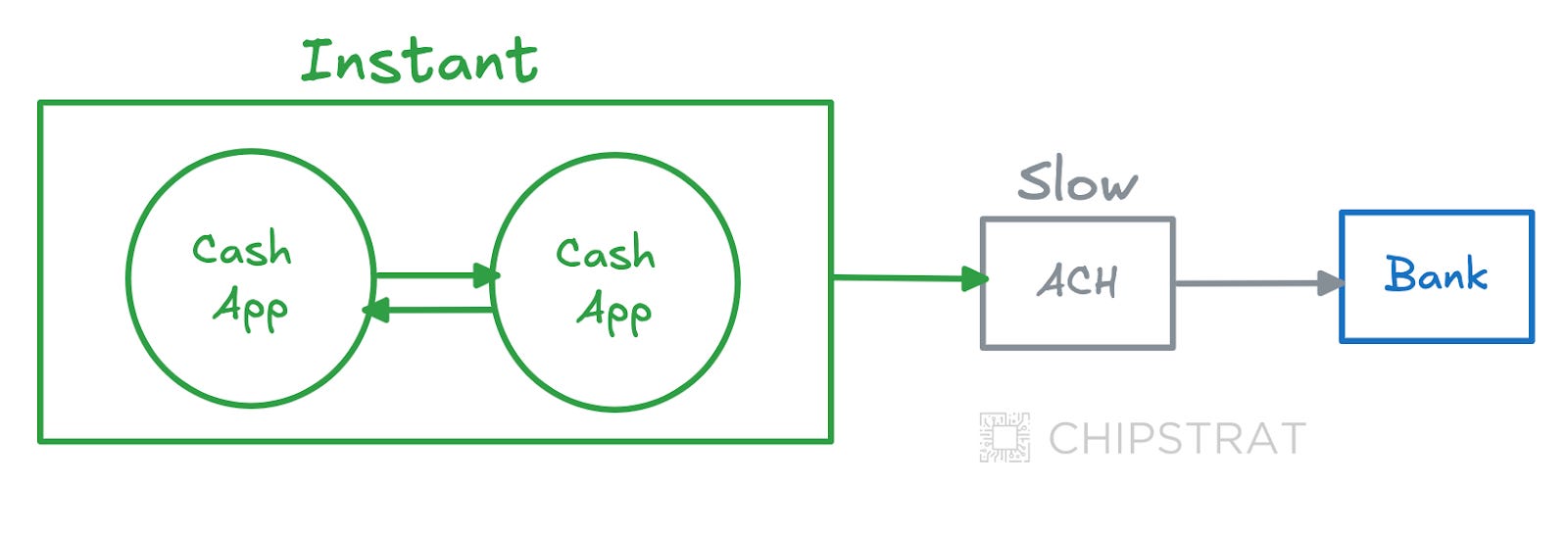
Transferring money is often a slow and frustrating experience. Peer-to-peer (P2P) apps like Cash App or Venmo, though convenient for internal transfers on the P2P network, are still hampered by the slow pace of traditional banking infrastructure when moving funds externally.
The culprit? The Automated Clearing House. Once a revolutionary system, it is now a bottleneck in the modern financial landscape.
Here’s a bit of history for those who want to understand the problem ACH solves. (Feel free to skip).
This is from Acquired’s Visa episode, recounting how early credit cards worked in the late 1960s and early 1970s before ACH.
David: when you paid for something with a credit card in a store, all merchants had what was called a floor limit. The floor limit was any transaction over that limit could not be authorized directly on the floor and say it was $50 or something like that. Anything paid with a credit card under $50 was basically within the judgment of the cashier to say yes or no. Everybody just said, yes. The reality was, this was the threshold below which the banks and Visa were willing to say, okay, we'll accept a certain amount of fraud.
Above that limit, the cashier had to go call up the merchant bank and say, hey, Benjamin Gilbert, his card number is XYZ123, can you look up his credit? He wants to buy a $500 refrigerator. Can you tell me if he's good for it?
Ben: You had a person at the merchant’s bank calling a person at the cardholder’s bank. Today, that is known as VisaNet. There's this piece of technology that sits in the middle that eliminates that bank to bank phone call.
David: That process that we just described could take 20 minutes, and it just didn't work outside of business hours for those banks.
To build VisaNet, (1) it involves building a first nationwide and then ultimately worldwide telecom network so that the electronic communication can happen. (2) Installing computer systems in each member bank around the country so that instead of the banks calling the other banks, this can happen over computers. (3) Training the people at the banks on how to use these new computer systems. (4) Building a new centralized data center for Visa in the Bay Area.
David: Miraculously, Ahram and his new tiger Visa tech team do it in nine months. And it works.
Ben: Okay, they build what becomes VisaNet in-house. At this point, there's no internet, so it's all just working over telephone communication.
David: Yup, direct networking. Importantly, this is only for transaction authorizations. The cards and the point of sale have not been digitized yet. That's going to be the final third piece of the stool of technology that Visa builds. This is just when a merchant makes a call to their bank saying, hey, is this card good for this amount? This is then the Interbank communication.
Ben: How does the settlement happen at this point in history?
David: That's the next big operational technical problem that Visa needs to solve.
Ben: It's literally moving the money when it needs to be moved.
David: Reconciling the transactions, moving the money, getting everything wrapped up at the end of the day, week, month, sending out statements, all this stuff. You can think of the first piece that we just described as the authorization as the front end of a payment card system. The settlement is the back end. The front end piece consumed a lot of phone time and people, the back end piece consumed a lot of paper and time too, maybe more time, but a lot of paper.
Ben: Because you're effectively mailing checks.
David: Even more perniciously, as the network grew, and at this point in time, Visa is growing explosively, the complexity of this settlement piece also grows exponentially. Every new bank node that you add into the system now has to interact with all the other bank nodes, so this is a hard computer science problem.
Ben: It's an n-squared problem.
David: It's a problem that is easily solved by computers. But when you're doing all this manually with paper, this is a big, big problem.
Ben: N-squared is much worse when you're doing it with paper than with computers.
David: What you really need to do this efficiently is an automated clearing house.
Visa builds an automated clearing house for themselves to do settlement electronically over the network. They ended up calling this project BASE II after BASE I, which was the first thing doing authorizations. This happens at the exact same time and place as when the Federal Reserve is building their own ACH system for checks—automated clearing house, ACH, everything in the banking system. That was built by the San Francisco branch of the Federal Reserve in the exact same years in the 70s when Visa was building their own, essentially, automated clearing house system.
Ben: Again, the problem is this gigantic list of a whole bunch of transactions just happened. People just agreed to make them happen, and now we need to settle up at the end of the day. If you paid me $100 500 times, and I paid you $100 400 times, what is the net that actually needs to get transferred? That is a far more efficient way. Batching them up is a far more efficient way than transferring the money back and forth every single time, but still can be a complicated problem, especially when you have thousands of banks on each side of that equation.
David: Once BASE II is done—and again, it also happens in less than a year that it's live and up and running—average settlement time for transactions on the Visa network go from taking a week on average to happening in batch overnight, every single night.
The Automated Clearing House was a great invention. It turned a slow, manual process into an automated process that ran overnight during the business week. The problem is we still use that 50+ year-old overnight system in our instantaneous world.
The desire for instant money transfers clashes with the reality of the ACH network. While peer-to-peer (P2P) transactions within Block’s network are immediate, transferring that money to an external bank account involves ACH, leading to 1-3 business day delays.
If you receive money from a friend but want that money in your bank account, be prepared to wait for ACH processing.
Cash App’s website confirms that free transactions from Cash App to your bank account take 1-3 business days via ACH.
When transferring money from Cash App to a linked account, there's no fee for a standard cash out, which typically takes 1-3 business days, while there is an instant deposit fee (0.5%-1.75%) for expedited transfers — typically funds are available within minutes.
Two caveats.
First, Cash App can instantly transfer money to your bank account for a fee. This is essentially Cash App extending you a short-term loan while the ACH clears in the background. The fee covers the risk Cash App assumes.
Secondly, Block offers a prepaid Cash App debit card, which allows users to spend their Cash App balance anywhere they can pay with Visa. This is a nice workaround; for example, users canreceive money from their friends via Cash App and immeditely go buy groceries without waiting for an ACH transfer. This Cash App card balance is even FDIC insured.
In a perfect scenario, all businesses would accept Cash App payments. However, unless every entity the business transacts with is within the Block network, they will inevitably need to transfer Cash App funds into a traditional bank account and face the delays associated with ACH transfers.
Bitcoin Is Faster Than ACH And Could Be A Trusted Currency
Block faces a significant challenge: getting all entities onto its network is unlikely due to competition from other P2P networks (Venmo, Paypal, Zelle) and regulatory hurdles. Bitcoin offers a potential solution by enabling faster transfers than ACH.
But what distinguishes Bitcoin from using a P2P network like Cash App, where direct transfers are instantaneous, and the ACH delay only impacts money coming in and out of a traditional bank account?
The problem with P2P networks is that they are proprietary platforms that potentially lock businesses into a single provider. In contrast, Bitcoin is a protocol that can be implemented by many infrastructure providers, offering businesses choice and flexibility and avoiding lock-in.
There’s still the chicken and the egg problem for businesses; if the entities they need to turn around and pay don’t also accept Bitcoin, the business will need to convert Bitcoin back to US dollars, which will involve ACH or a similar slow bank transfer mechanism.
Reducing Cost
Not only can Bitcoin move faster than ACH, but it can potentially reduce fees, especially for cross-border transactions.
In Block’s Q1’24 Shareholder Letter, Dorsey articulates how Bitcoin can reduce Block’s costs.
But why spend time on bitcoin at all? We believe the world needs an open protocol for money, one that’s not owned or controlled by any single entity. We believe bitcoin is the best and only candidate to be that protocol, and to ultimately become the native currency of the internet. How does this benefit Block? An open protocol for money helps us serve more people around the world faster. We could build an amazing product experience once and ship it globally to any market in the world, without needing to customize for hundreds of different payment schemes.This creates the opportunity to accelerate our growth potential and improve our cost structure at the same time. It truly levels the playing field for a company like ours, and for everyone in the world.
Block stands to gain significantly by bypassing the fragmented landscape of national payment systems. A unified, cross-border solution would not only reduce operational costs and streamline development but also enable the company to rapidly expand its services to a global customer base.
I can definitely support Block's pursuit of Bitcoin as a better native digital currency to speed up innovation, reach the entire world, and reduce costs.
However, Block still has to find a reason why customers want to use Bitcoin.
Bitcoin Adoption
Are there real problems Bitcoin could solve that could drive widespread Bitcoin adoption?
Just spitballing, here’s an idea: I’d imagine many people who work hourly jobs – think Costco – feel the pain of waiting two weeks between paychecks.
What if the latency between when Costco employees work and when they are paid could be reduced to a single day?
I’m guessing that most employers pay employees bi-weekly for various reasons like cash flow management, but mainly because there are ACH fees for every direct deposit.
Yet amidst today’s labor shortages, an hourly retailer could definitely differentiate itself as a great employer by offering to pay employees the very next day after their shift ends. Work Monday through Friday? Get paid Tuesday through Saturday!
With today’s system, this employee benefit would drive ACH fees up by an order of magnitude — e.g. 20 payments per month instead of 2.
What if a digitally native currency like Bitcoin could enable next-day payments with significantly lower fees? Could a company like Costco afford to adopt it and pay its employees daily?
Sure, there are all sorts of accounting and political reasons it would be hard to implement, but imagine what that would do for employee happiness, hiring, and retention.
If a huge employer like Costco offered to pay employees the next day with a digital currency like Bitcoin, that could actually move the needle on Bitcoin adoption in the United States.
Now imagine that the same employer accepts digital currency for their goods, enabling them to have a pool of that currency to use to pay employees.
And remember this problem?
There’s still the chicken and the egg problem for businesses; if the entities they need to turn around and pay don’t also accept Bitcoin, the business will need to convert Bitcoin back to US dollars, which will involve ACH or a similar slow bank transfer mechanism.
Large retailers like Costco and Walmart have power over their suppliers and could literally demand that suppliers start accepting Bitcoin (or charge them more for US dollars).
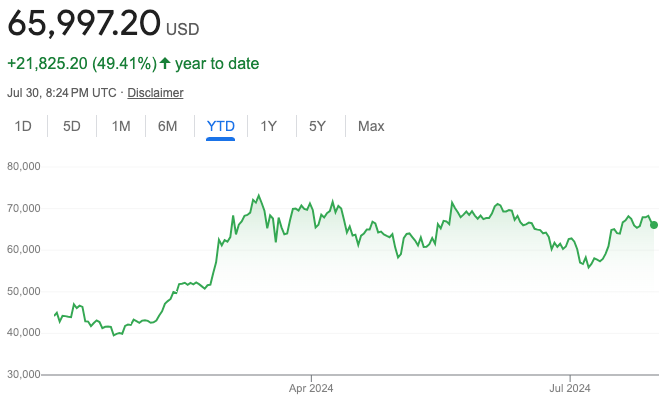
However, the significant problem holding back businesses like Costco from adopting Bitcoin is volatility. Costco can’t stomach running a business using a currency that fluctuates wildly, and workers can’t budget when the value of their paycheck fluctuates several percentage points intraday.
Bitcoin can’t be a standard currency with such massive swings in volatility.
I haven’t seen Block comment on how Bitcoin volatility impacts adoption or offer any ideas on how to address it. What’s the point of building Bitcoin hardware if the general population won’t adopt Bitcoin due to volatility concerns?
Block Bitcoin Hardware
BitKey Wallet
Block’s first Bitcoin hardware product focuses on improving the experience for those already invested in Bitcoin by tackling the pain points of Bitcoin storage. Currently, this involves a trade-off between the complexity of self-custody and the risks of custodial solutions. Self-custody offers control but is fraught with technical challenges, while custodial solutions raise concerns about security and trust.
In the most egregious case, Russian hackers were convicted of stealing 647,000 Bitcoin from Mt. Gox – an amount that would now be worth $42B (at the time of writing). There are even websites that keep track of all Bitcoin custodian breaches, including a $300M heist as recent as last month.
Block aims to bridge this gap by providing a more user-friendly and secure solution with BitKey, “a self-custody Bitcoin wallet that combines the convenience of an exchange with the security of a hardware wallet.”
Once again, Block demonstrates its willingness to innovate in the financial sector, unafraid to venture into the realm of consumer-grade hardware to enhance the user experience.
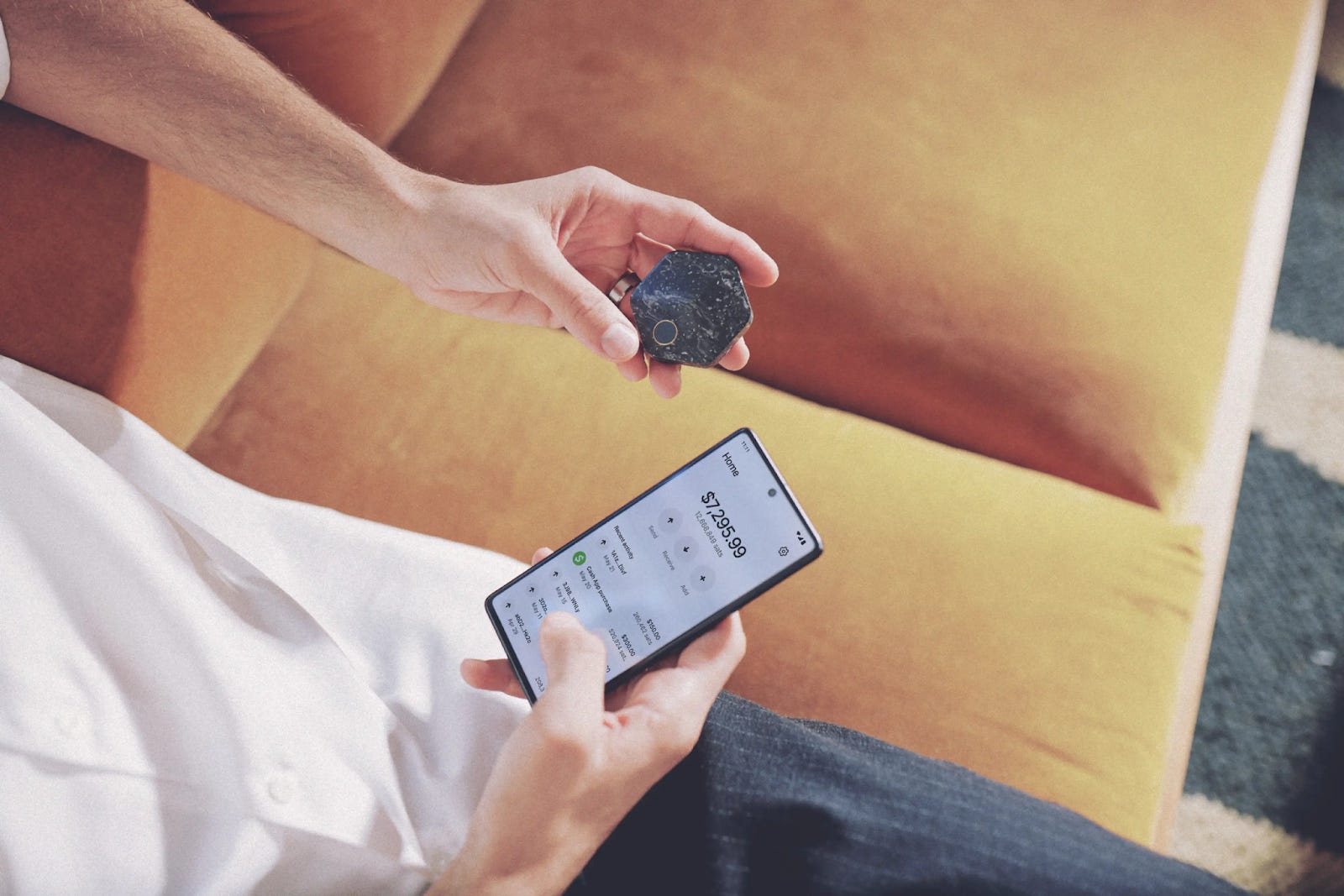
The BitKey hardware wallet shown in the left hand.
From BitKey’s product principles (which I seriously appreciate that they share):
Today, the vast majority of the estimated 175M global bitcoin owners - many of whom are located in emerging economies - don't actually have their bitcoin keys. Instead they rely on custodians: institutions who hold their keys, and thus control their money.
Put simply: when a custodial wallet owns your bitcoin key, that custodian, not you, owns the decisions about when and how you can access your money, how your money is kept secure, and whether you can even access their services in the first place.
Self-custody of bitcoin, however, hasn’t offered a substantially better alternative yet. Today, keeping your own keys isn’t as simple as it sounds, and often isn’t as safe as people need. Early adopters who hold their own keys today often rely on a complex set of apps and hardware devices that are extremely technical and hard to use. Often the only way to recover your money if you lose your phone or hardware wallet is to rely on a 12- or 24-word secret phrase – which we think customers will either forget, or more likely out of a fear of forgetting, write on a post-it note.
Additionally, self-custody wallets today are designed to be largely inaccessible lockboxes for storing long-term reserves – hard to access, and especially so if you lose the keys. People don’t just need long-term protection of their bitcoin though – they also need to manage their money with easy ways to make a payment, get paid or send money to a friend or family member.
All of this erodes the benefits of bitcoin because it makes it more challenging to access. We believe a better product experience that allows customers to both own and manage their bitcoin can lead to better financial opportunities for people.
Block wants to make it easier to store and access Bitcoin by
building an easy-to-use self-custody wallet and
pairing it with their Cash App (to send and receive Bitcoin)
That means we want to serve two Jobs To Be Done for our customers:
Help me own bitcoin easily and safely. Ownership of your keys means ownership of your money. We are building a wallet that prioritizes security and great customer experiences equally.
Help me manage my bitcoin by making it easy to send and receive money anywhere in the world quickly, easily, and cost-effectively. Bitcoin, especially with its layer 2 innovation, Lightning, can help people send and receive money between friends, families, and businesses – both internationally and domestically. This decentralized payments network has the potential to create a more inclusive financial system for those who have traditionally been underserved.
Why is the hardware needed?
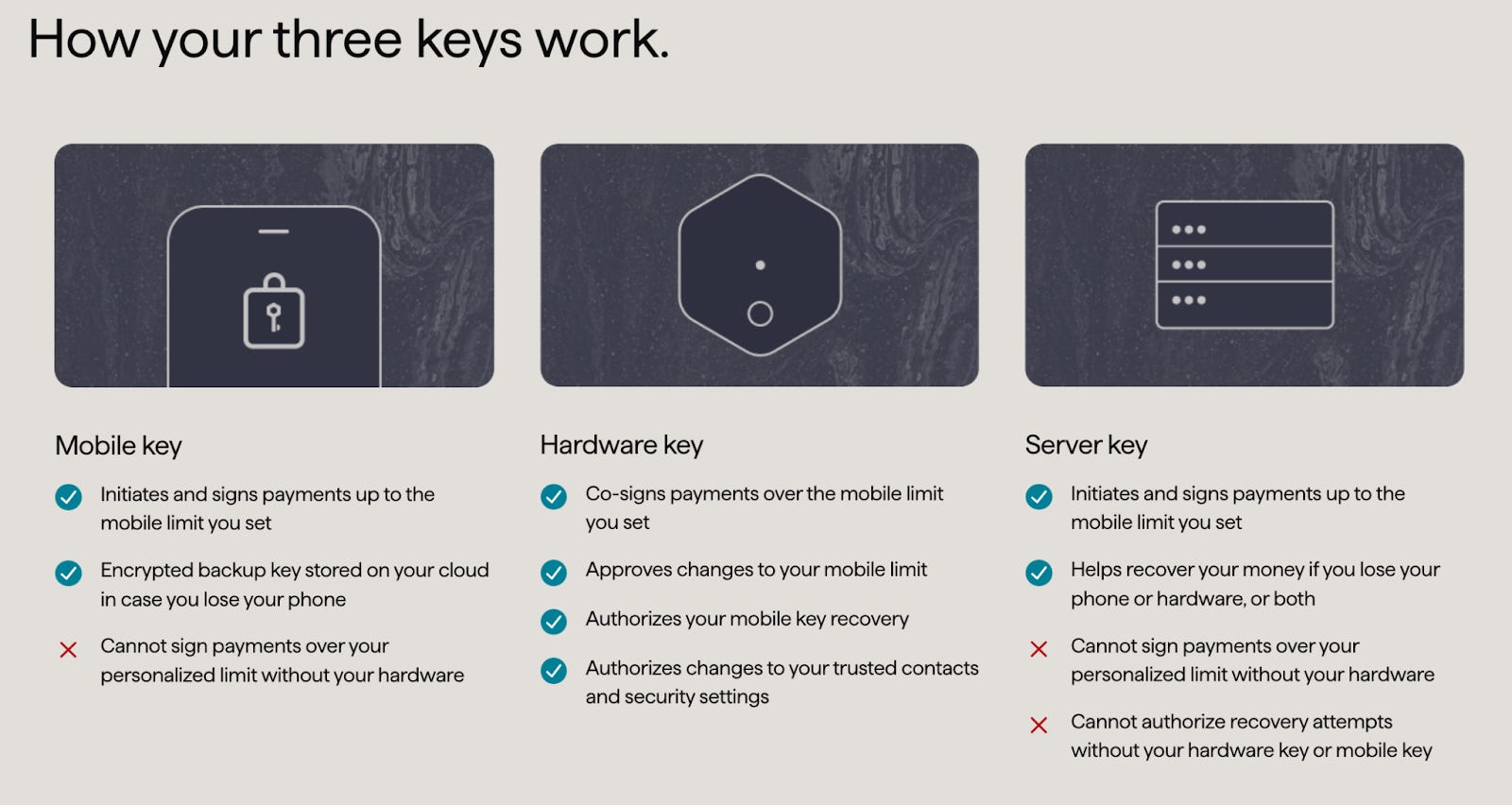
Bitkey is a multi-signature cryptocurrency wallet that prioritizes user security by requiring two out of three keys to authorize transactions. The keys are stored across the user's phone, a hardware device, and the Bitkey server.
This is a nice solution to the stated problem, and I appreciate Bitkey’s design and product principles. Bitkey truly does seem like a better experience for existing Bitcoin owners.
That said, will this increase Bitcoin adoption in the US? I personally don’t think so. If it doesn’t increase adoption, why do it?
If you’re a Block employee reading this, I’d love to connect with someone who could help me understand Bitkey’s adoption and whether it’s driving new Bitcoin adoption.
Hardware Design
As discussed in part 1, one of Block's core competencies is hardware, so they designed the hardware for this wallet in-house.
They also openly shared a lot of helpful information along the way, which can be found on Bitkey’s blog.
I think this transparency is awesome, and it is likely because Block wants to increase awareness and trust in the solution and recruit employees. They aren’t hung up on intellectual property concerns or competition because Block isn’t trying to make money from the Bitkey hardware but is simply trying to get more people using Bitcoin.
We view hardware as an acquisition tool and not a profit center for our business.
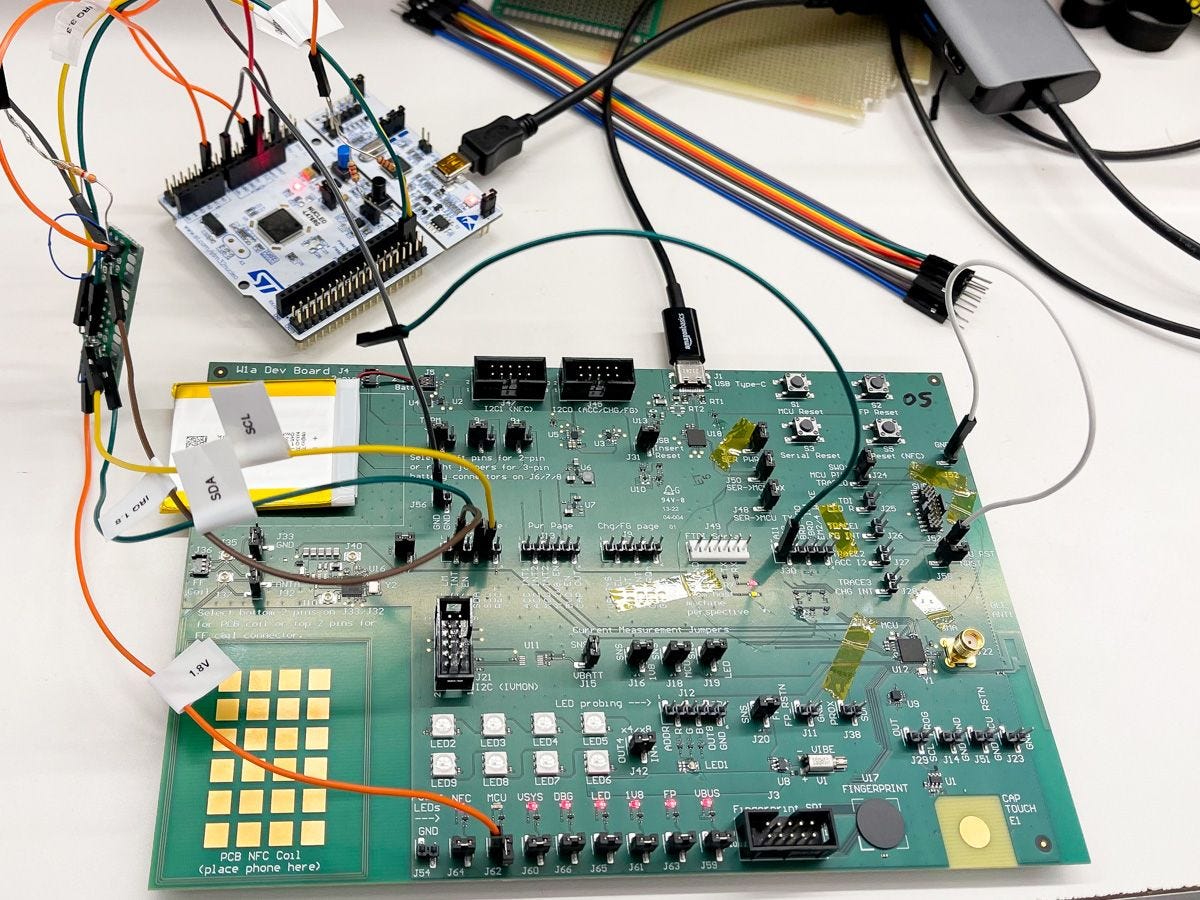
If you want to follow along the journey of bringing Bitkey's hardware to life, check out the following articles, which provide a glimpse into the decision-making process and complexities involved in creating consumer electronics. (I found them enlightening!)
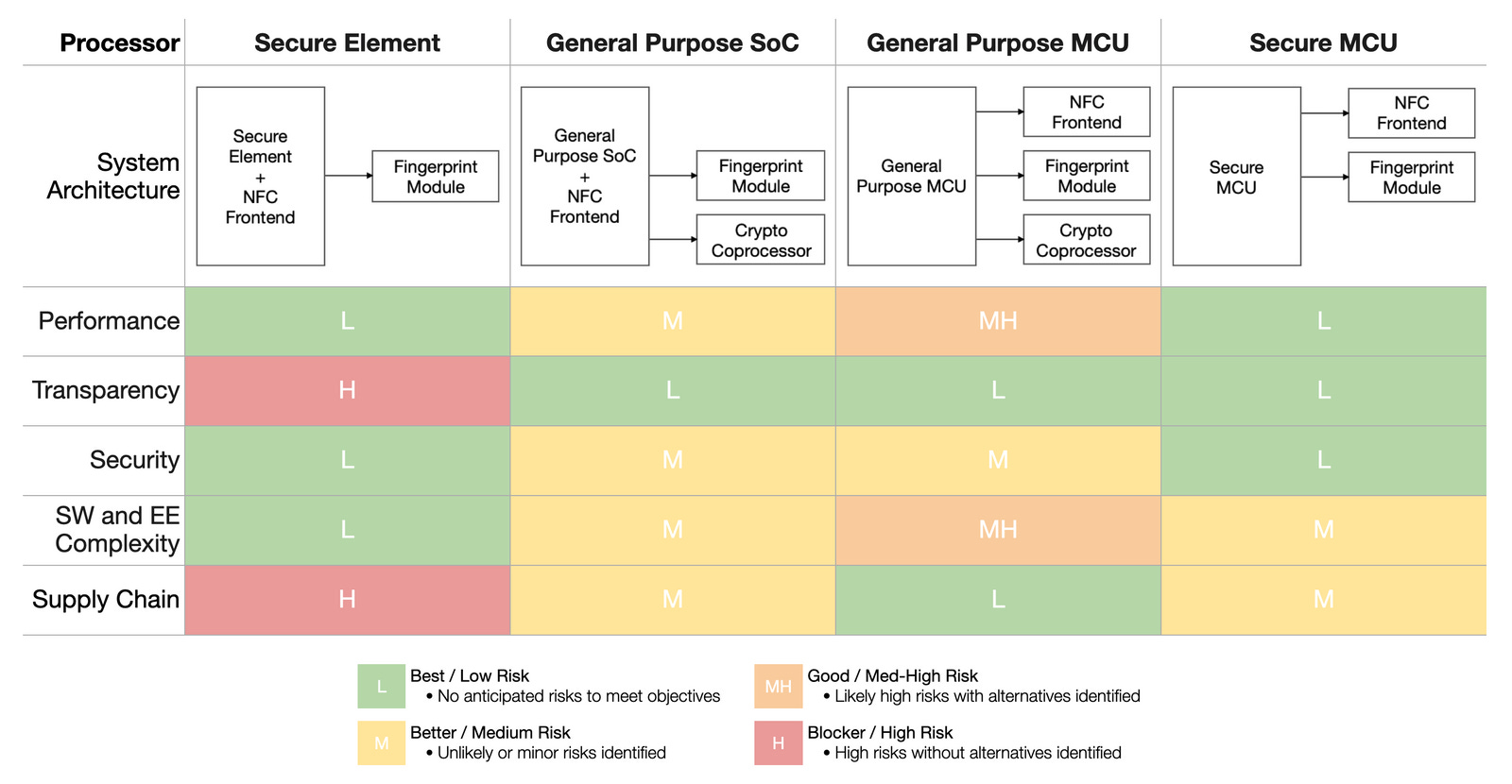
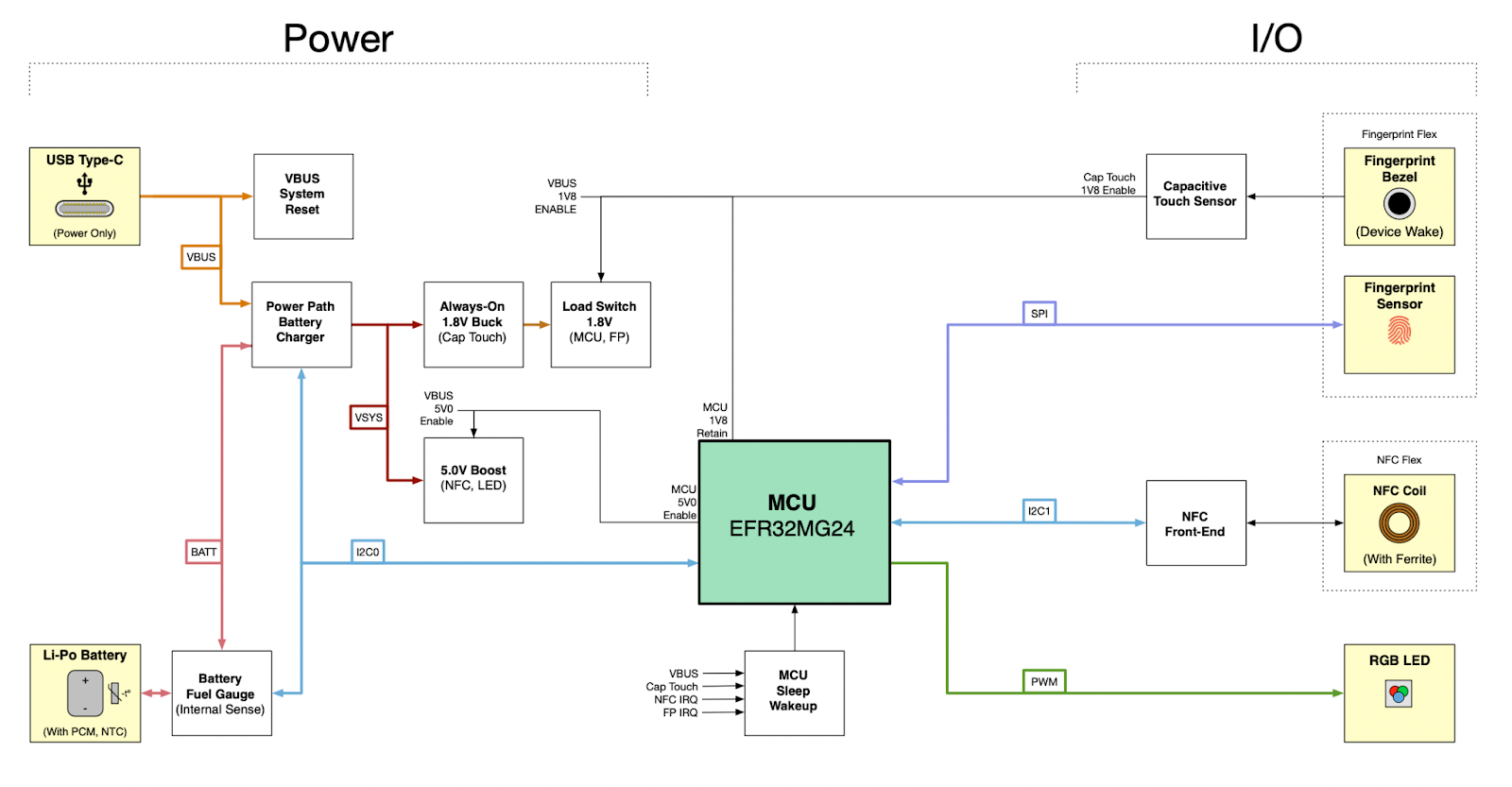
In this post, Bitkey walks through their processor decision matrix and how they ultimately decided on a particular Silicon Labs secure microcontroller for their hardware wallet. (Yep, Arm inside).
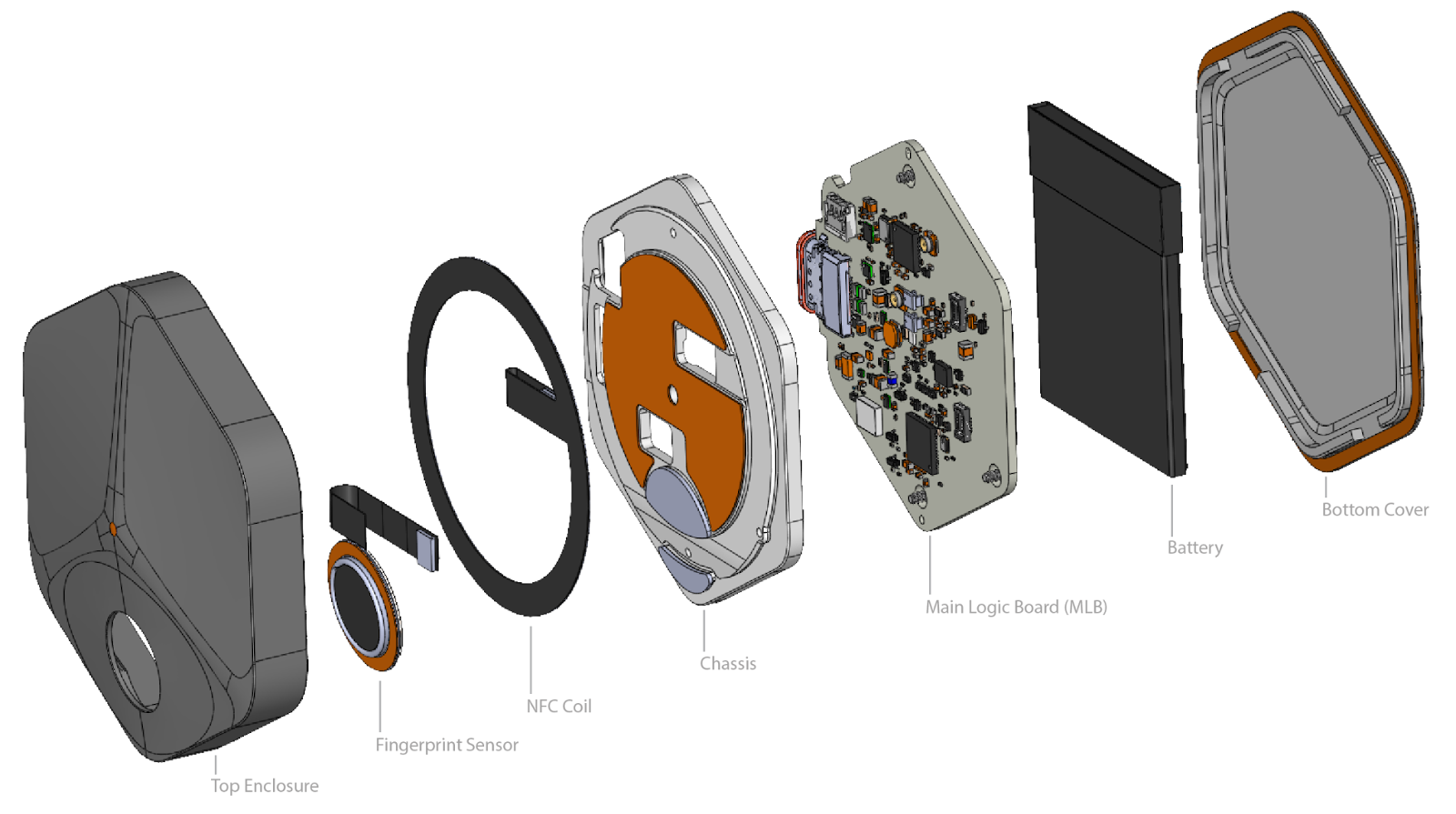
After choosing a processor, they illustrate the high-level system block diagram:
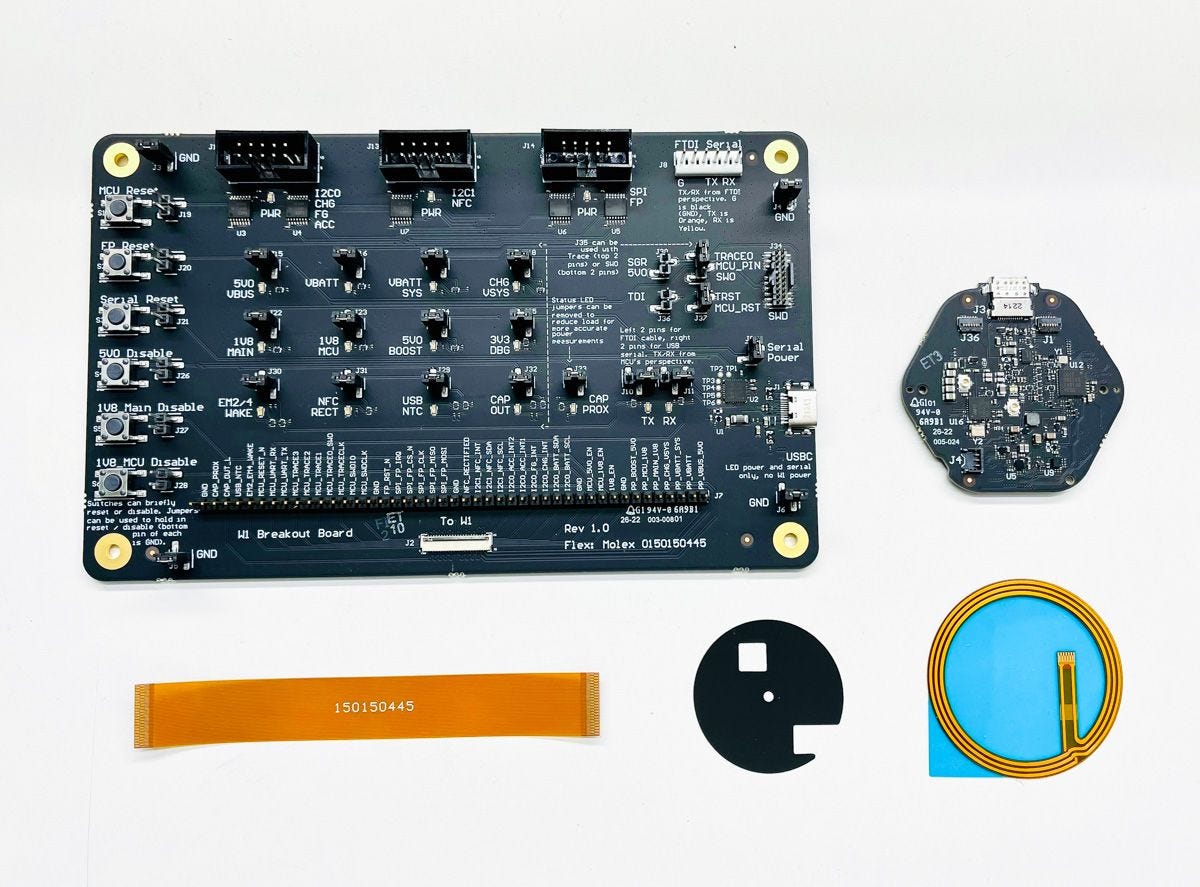
Here, Bitkey explains in detail what they were looking for in a contract manufacturer and how that ultimately led them to partner with Flex (previously Flextronics).
This was an interesting read, as Bitkey lays out a comprehensive set of questions that they used to evaluate contract manufacturers. The criteria include engineering and operations capabilities, quality assurance, business alignment, growth potential, cost considerations, and specific policy risks related to cryptocurrency and general manufacturing.
Bitkey Conclusion
As with Square hardware, Block’s design and engineering chops are on full display with Bitkey.
That said, I wonder how many customers actually bought and used this hardware.
Is it useful enough to convince existing Bitcoin holders to change their current storage solution? I can imagine self-custodians switching to this solution, but are users who store their Bitcoin with an institution willing to pay for the hardware to reduce their risk? Maybe those with large investments?
What problem is Block trying to solve with a custom Bitcoin ASIC, and why are they uniquely positioned to solve it?
We’ve already established that Block wants Bitcoin to become a native digital currency and is trying to remove any friction in the Bitcoin ecosystem today.
Bitkey was aimed at the demand side of the equation, attempting to increase user adoption of Bitcoin by making it easier to store and manage.
Bitcoin mining ASIC development is tackling the other end of the spectrum – supply.
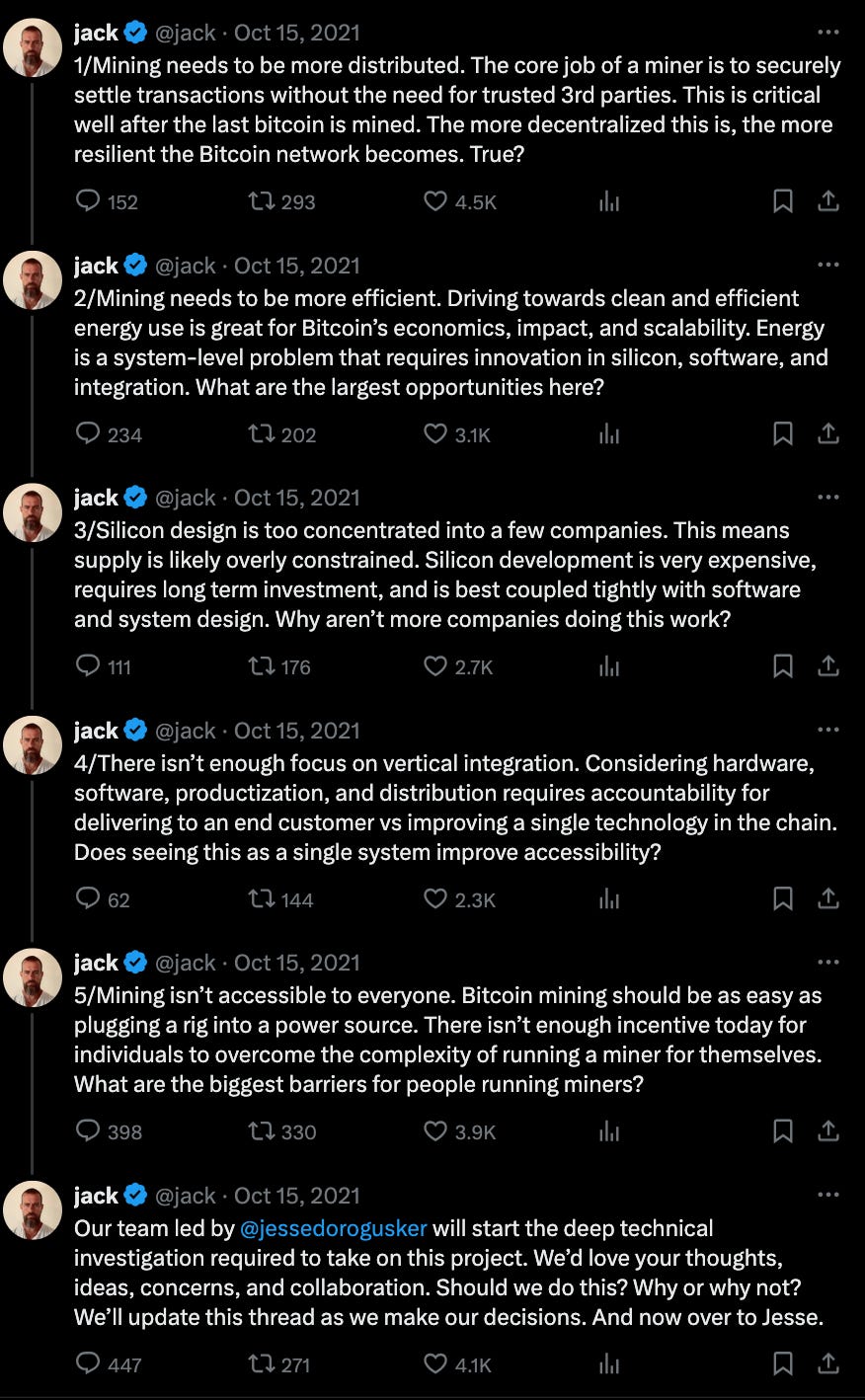
Jack Dorsey has been thinking about Bitcoin mining for some time now. See the entire thread from October 2021, where he calls out pains for Bitcoin suppliers (miners)—access to mining rigs is limited and concentrated, the rigs themselves are inefficient, and the end-to-end mining experience is poor.
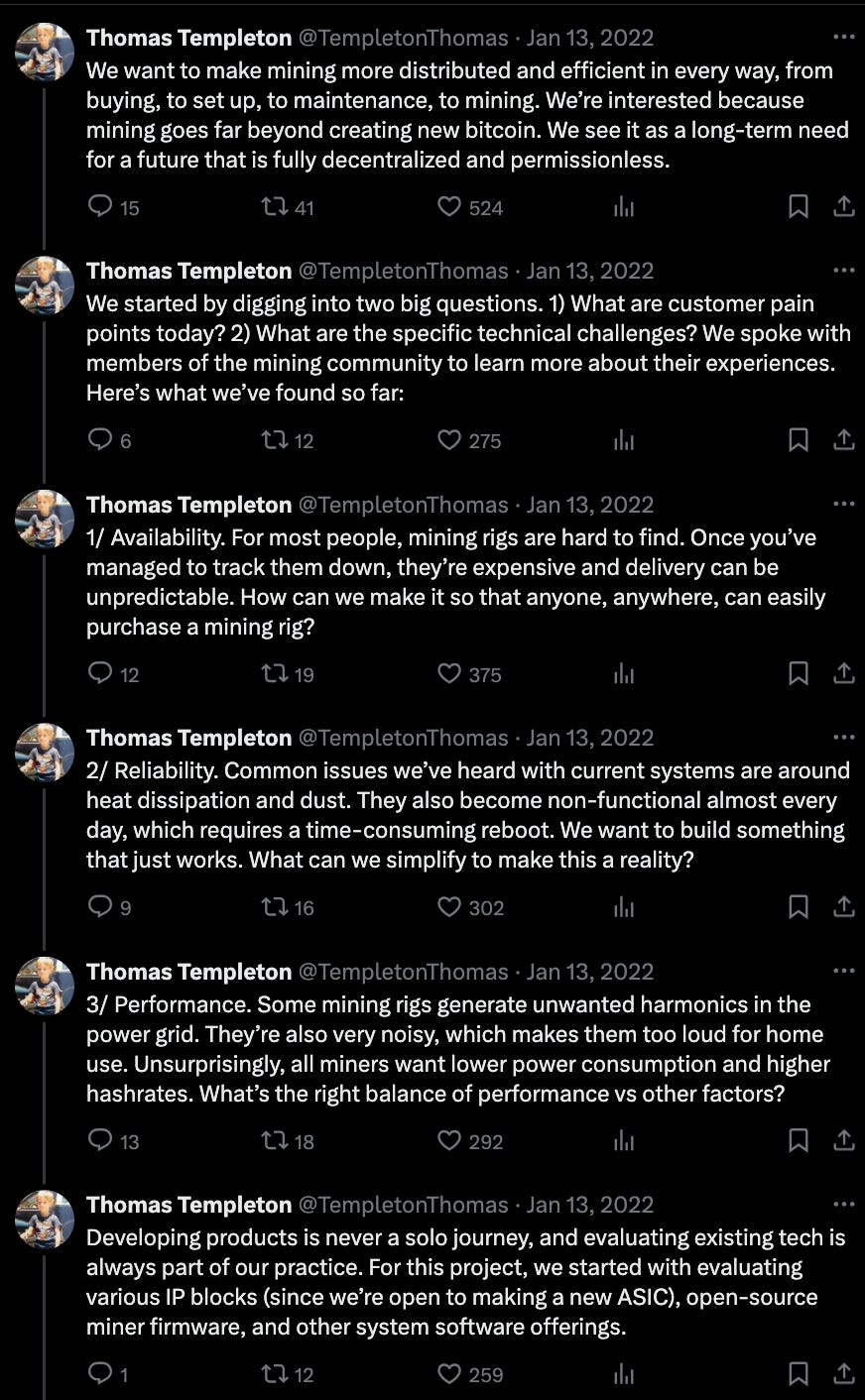
In January 2022, Thomas Templeton, leader of Block's Proto team responsible for their self-custody wallet, reaffirmed the company's commitment to developing a Bitcoin mining ASIC. He outlined specific areas where they aim to improve upon existing mining rigs, including availability, reliability, and performance.
Today, Block's strategy for creating a mining system strongly focuses on lessening dependence on China. From Block’s Q1’24 Shareholder Letter,
“Why the hell are you all spending so much time on bitcoin?”
We get this question a lot. We’ll use this quarter’s letter to answer it.
…
We also want to help secure the bitcoin network by building bitcoin mining hardware. We’re introducing an entirely new 3 nanometer ASIC mining chip, in addition to an entire mining rig system.
Why? We’ve heard from countless miners globally about their desire for reliable, flexible, and US-based mining hardware and software. This contributes to the health and security of the bitcoin network by further decentralizing both the supply of mining hardware and the distribution of hashrate, the computing power devoted to mining bitcoin.
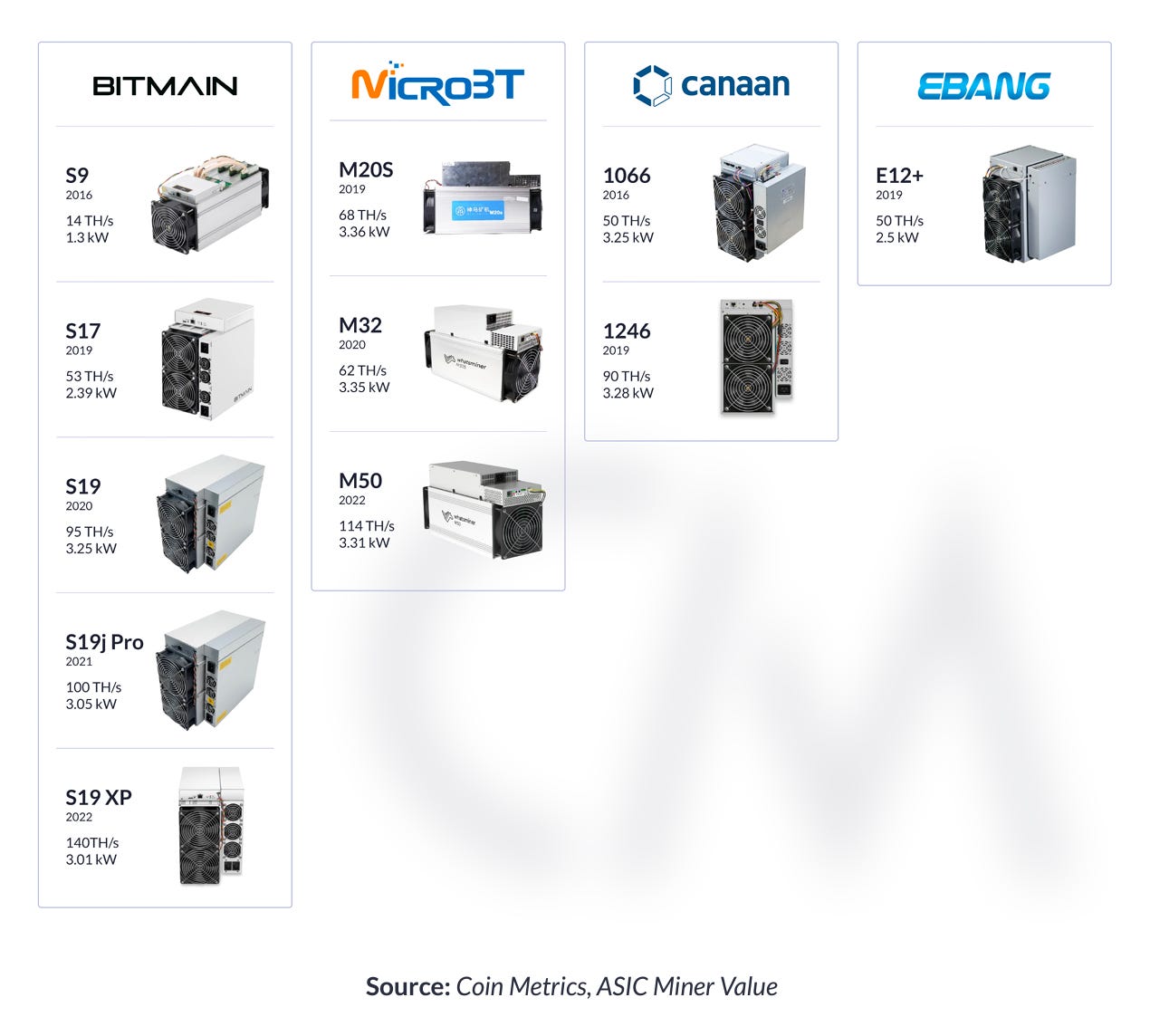
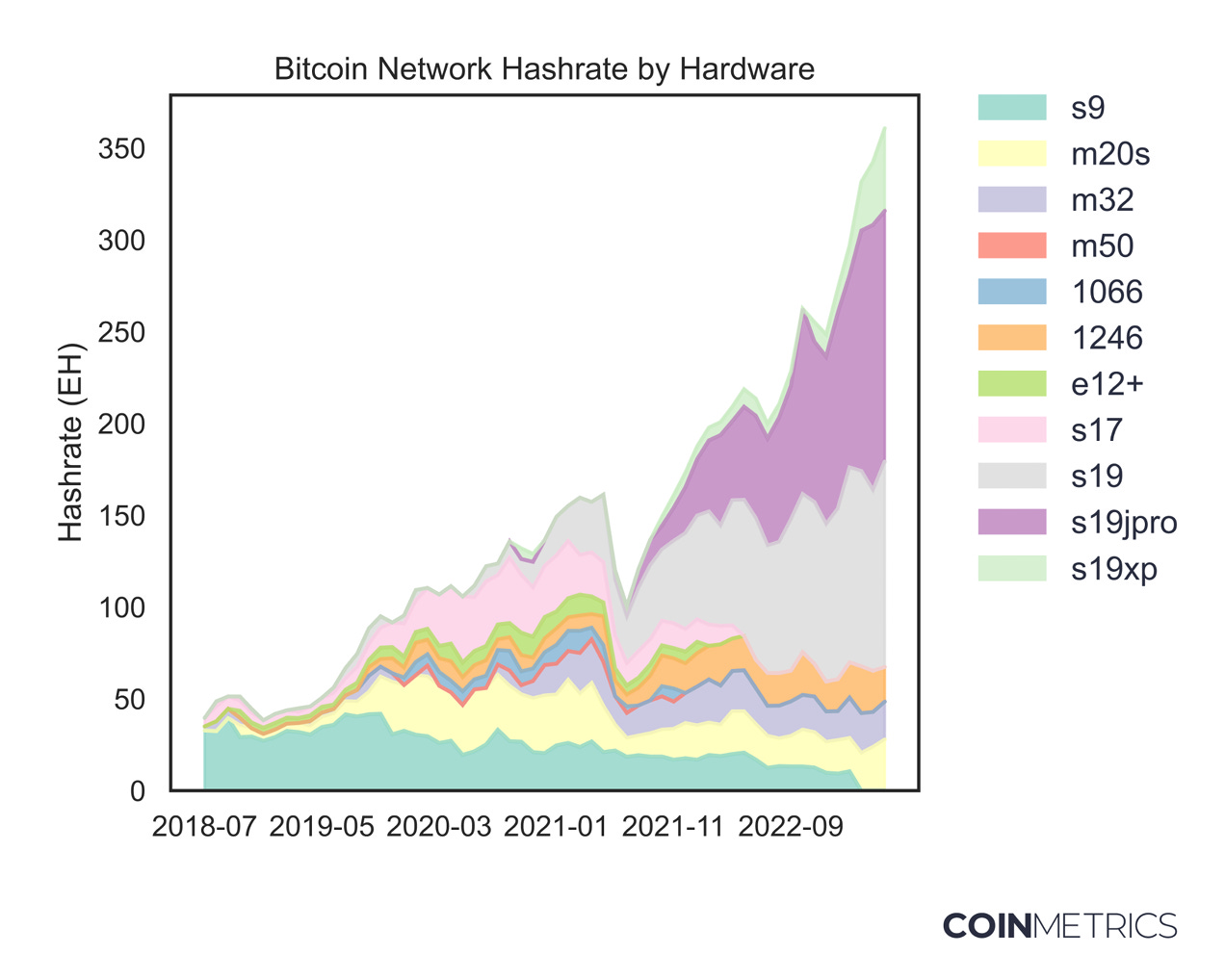
Bitcoin is dependent on mining, and miners mostly source their hardware from China.
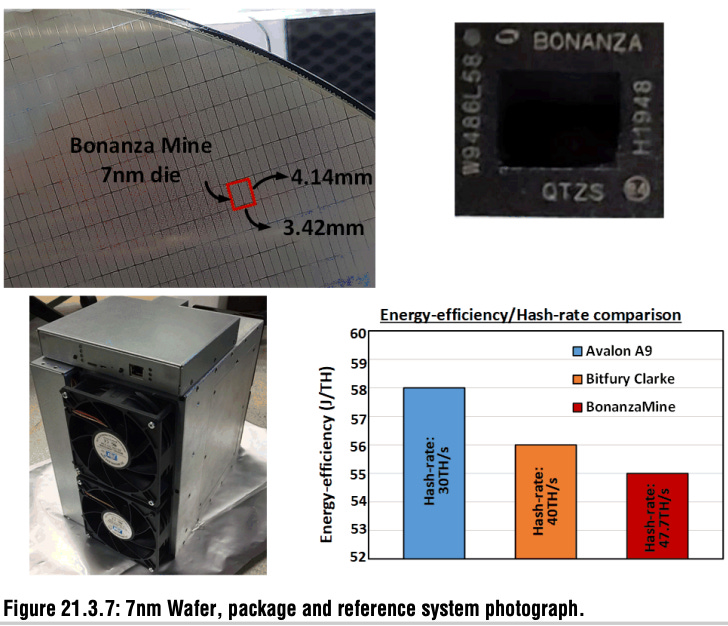
Example of popular Bitcoin mining ASICs. All companies are based in China.
The Bitcoin network is dominated by Chinese ASICs.
Others are trying to get into the space, such as VC-backed California-based Auradine. That said, Dorsey is correct in pointing out that Block is much better capitalized than a startup. And they have the relevant chops to pull it off.
With a standalone mining chip, we will represent the only large, well capitalized mining hardware vendor with such a solution. We believe this will help unlock mining system innovation and support the much needed development of new mining system form factors and use cases. With the full mining rig system, we’ll build on our product and software development expertise, system engineering competency, supply chain experience, and aftermarket support capability (with tens of millions of devices shipped) to build something miners can depend on. This is a massive market and opportunity we’re very excited about.
This last sentence about a “massive market” makes me wonder if Block actually does want to make money on hardware.
Can Block Build It?
In this April 2023 update, Block asserts they have the skills to take this on and have made significant progress building a team and designing an ASIC on 5nm technology:
We are uniquely well-positioned to help address this problem by introducing new bitcoin mining ASIC and hardware solutions. Block has longstanding ASIC design experience, having made ASICs for our Square point-of-sale solutions for years. We also have deep expertise and a proven track record of building compelling, vertically integrated customer experiences in hardware and software.
Since kicking off the project, we have made significant progress in the development of our ASIC. This has included assembling a team of ASIC designers and developing initial designs that are testing competitively with the best ASICs on the market.
Block’s initial design used 5nm technology, but as they approached tape out, they had the opportunity to buy 5nm ASIC miners from Intel. So, they acquired those chips to kickstart their system design and software prototyping efforts and pivoted to a 3nm design instead.
However, as we were planning this tape out, we learned of an opportunity to acquire a large volume of bitcoin mining ASICs from Intel, and just completed a purchase agreement with Intel. This immediate access to production ASICs accelerates our mining system development, enabling us to get to market more quickly. Additionally, we can now focus our design team exclusively on cutting edge three nanometer ASIC development.
It appears that Block went ahead and taped out some 5nm prototypes to get some post-silicon validation and inform their 3nm efforts.
In support of our three nanometer ASIC development, this month we moved forward with manufacturing a prototype of our completed five nanometer design. This is an exciting milestone which will allow us to experiment with design variants, validate our design work, and calibrate our testing on real silicon. We expect to receive the prototypes back this fall. They will be a valuable input into our three nanometer ASIC development work.
Intel’s Bitcoin ASICs
I was surprised by the mention of Intel Bitcoin ASICs, which was not on my radar.
Today, we at Intel are declaring our intent to contribute to the development of blockchain technologies, with a roadmap of energy-efficient accelerators.
Our blockchain accelerator will ship later this year. We are engaged directly with customers that share our sustainability goals. Argo Blockchain, BLOCK (formerly known as Square) and GRIID Infrastructure are among our first customers for this upcoming product. This architecture is implemented on a tiny piece of silicon so that it has minimal impact to the supply of current products.
The technical details regarding this ASIC are available in Intel’s ISSCC paper, which covers Intel’s first generation of Bitcoin ASIC dubbed BZM1 (Bonanza Mine 1).
It's been just a year since Intel officially announced its Bitcoin-mining Blockscale ASICs, but today the company announced the end of life of its first-gen Blockscale 1000-series chips without announcing any follow-up generations of the chips. We spoke with Intel on the matter, and the company told Tom's Hardware that “As we prioritize our investments in IDM 2.0, we have end-of-lifed the Intel Blockscale 1000 Series ASIC while we continue to support our Blockscale customers.”
In the original announcement that the company would enter the blockchain market, then-graphics-chief Raja Koduri noted that the company had created a Custom Compute Group within the AXG graphics unit to support the Bitcoin ASICs and "additional emerging technology." However, Intel recently restructured the AXG group, and Koduri left the company shortly thereafter.
Aside from exceptionally competitive performance relative to competing Bitcoin-mining chips, Blockscale's big value prop stemmed from the stability of Intel's chip-fabbing resources. Several large industrial mining companies signed large long-term deals for a steady supply of Blockscale ASICs, thus circumventing the volatility with the mostly China-based manufacturers that engaged in wild pricing manipulations based on Bitcoin valuations, were subject to tariffs, and suffered from supply disruptions and shortages, not to mention the increased costs of logistics and shipping from China.
Block’s Bitcoin mining efforts continue to carry the “designed and built without China” torch.
Firesale
It appears that as Intel shuddered this business, they offered to sell a large volume of these miners to Block, probably at a good price.
As Block mentioned,
We learned of an opportunity to acquire a large volume of bitcoin mining ASICs from Intel
which coincided with Intel shutting down their business.
Now What?
What is Block doing with these Intel BZM2 Bitcoin ASICs? They’re using them to develop their Mining Development Kit (MDK).
Today, we’re excited to announce the launch of our Mining Development Kit (MDK) beta program! As we begin to allocate a limited number of the first beta kits, we invite interested developers to submit their applications.
The intent behind the MDK beta is to engage with mining innovators in a transparent, open, and collaborative manner that supports the development of novel use cases for bitcoin mining.
Each MDK unit will consist of three hashboards equipped with 100 5-nm BZM2 ASIC chips and a controller board loaded with our custom firmware.
The system is expected to produce hash rates up to 110T, with energy efficiency ranging from 27-33J/T. It will also include an API for seamless integration with various existing miner management software solutions that should enhance the performance and usability of our hardware. Each hashboard is equipped with an embedded controller to allow more flexibility in controlling the ASICs. All the components are compatible with commonly available market options such as chassis, PSU, fans, and cables.
Note that the MDK hardware is early prototype hardware, using third-party mining chips. Our eventual production mining system will use our internally developed three-nanometer (3-nm) mining chip, which is expected to result in a much more performant system.
Block explains they’re using Intel’s chips now, and will swap in modular boards with their 3nm chips in the future.
And again, in the Q&A, they call out the Intel chips
What components are included in the beta version of the MDK?
Each MDK unit in our Beta will consist of three hashboards equipped with 100 Intel 5nm BZM2 ASIC chips and a single controller board loaded with our custom firmware. The system is expected to produce hash rates up to 110T, with energy efficiency ranging from 27-33J/T. It will also include a fully developed API.
Block’s 3nm ASICs
So, how are the 3nm ASICs coming along?
In April 2024, Block announced it was taping out the 3nm chip and building an entire rig, too. Note that the above MDK included some boards but not the full system.
Today, we are pleased to announce that we have finished development of our three-nanometer (nm) bitcoin mining chip and are in the process of completing a full tapeout of the design with a leading global semiconductor foundry. This marks an important milestone in our bitcoin mining project. Additionally, with our chip design complete, we are excited to share that we are developing a full bitcoin mining system.
It makes sense that they aren’t just building a chip but the entire system—they’ll need to build systems for internal testing anyway, and customers want systems, not chips (e.g. Nvidia DGX servers).
Which Foundry?
Who is this “leading global semiconductor foundry?” Given the 3nm nomenclature, the foundry could be TSMC or Samsung.
I’m guessing Samsung.
Samsung’s first gate-all-around (GAA) 3nm transistors in the wild were discovered in Jul 2023 in the Whatsminer M56S++ bitcoin mining ASIC from MicroBT. Could the same 3nm GAA technology be powering another bitcoin mining ASIC, this time from Block?
Full System + Software
Block is building the best end-to-end experience for managing Bitcoin rigs, from hardware to software.
With our bitcoin mining system, we will build on our product and software development expertise, system engineering competency, supply chain experience, and aftermarket support capability, with tens of millions of devices shipped. We intend to use this experience to bring a compelling, differentiated mining solution to market. For context, you can see the initial directions we shared on the mining software front.
Block’s fully integrated approach, from mining fleet management software down to the mining rig, will enable a better user experience than currently exists today:
Mining software controls the operation of and interaction between the various hardware components and subsystems within the miner (in particular the ASICs, fans, and power supply), as well as communication with external services such as mining pools and miner management systems, which manage fleets of miners within large mining facilities. Mining software also allows remote monitoring and control of mining hardware, at both the individual miner level, and at the fleet level (via miner management systems), as well as supporting diagnostics, troubleshooting, and repair of miners.
In many existing mining systems the level of control and diagnostics offered by the manufacturer’s software is limited. As a result, a number of third party firmware solutions have arisen, allowing miners to gain more visibility into, and fine-grained control over, key aspects of a miner’s operation, including management of ASIC frequency and power consumption. However, the development of these third party firmware solutions is challenged by the lack of transparency from the hardware vendors, and deployment of these solutions by mining operators generally results in voiding of the hardware manufacturer’s warranty.
As we approach development of our own mining software, our intention is to provide the customer with a significantly greater degree of control and diagnostic capability, both via the single-miner user interface and through a robust, well-documented API, as a standard part of the mining software. The API access will support easy integration between our mining hardware and third-party software solutions.
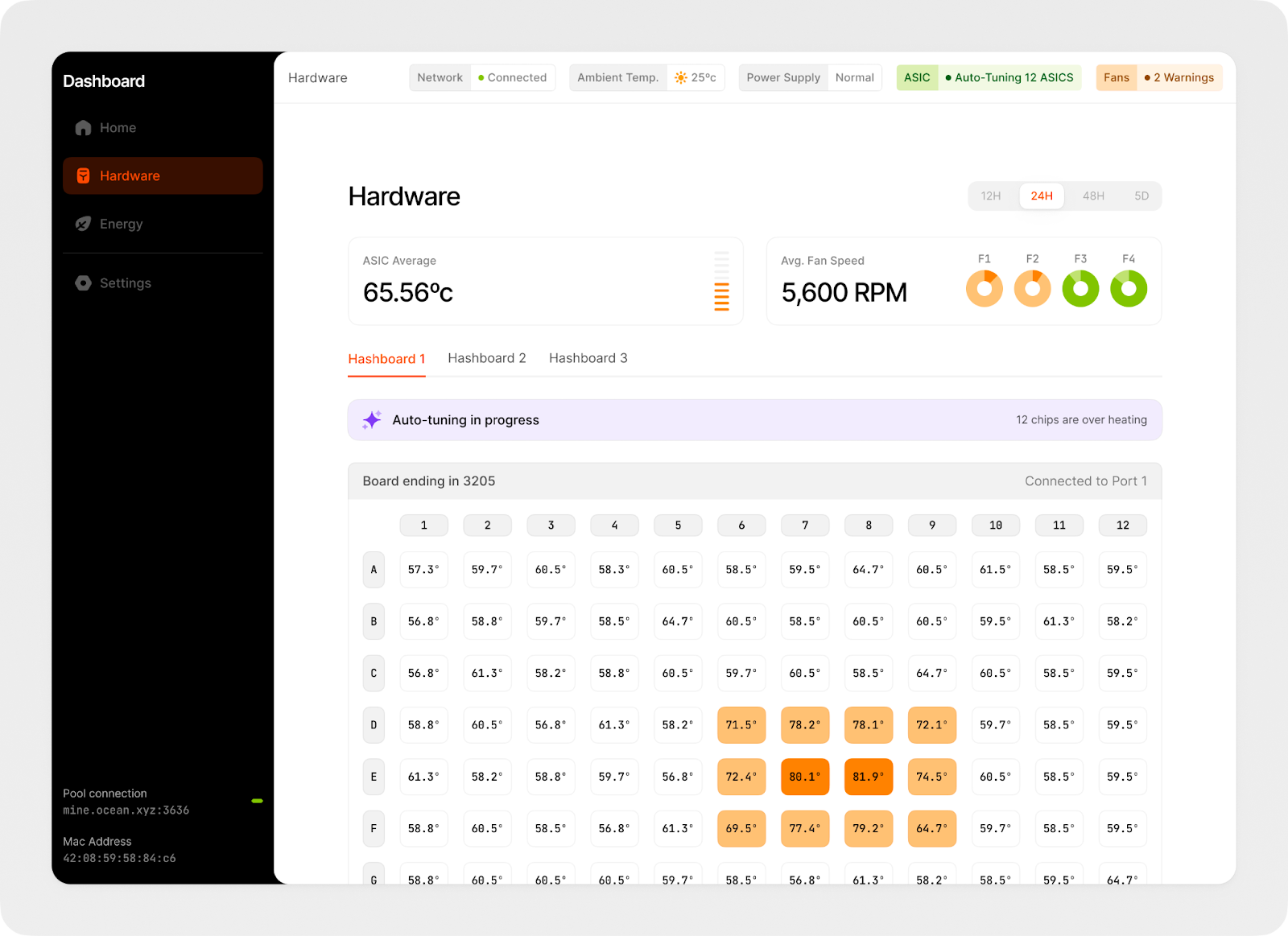
Examples shown include performance monitoring, power tuning, ASIC diagnostics, and failure mode notifications.
Block’s example ASIC diagnostics dashboard to highlight issues with particular ASICs.
First Customer
Ok, so Block is building 3nm Bitcoin mining rigs and making some sweet fleet management software too. That’s awesome. But who will buy these systems?
Today we are announcing an agreement to supply Core Scientific with our new 3-nanometer (3nm) mining ASICs representing approximately 15 EH/s (exahashes per second) of hashrate. The agreement provides the option for additional, significant volume and is one of the industry’s largest bitcoin mining ASIC agreements announced, in terms of hashrate.
Block also mentioned co-developing the mining rig system with ePIC Blockchain Technologies.
Our strategic agreement with Core Scientific is about more than just supply and demand—it's about exchanging expertise and collaboration. While supplying approximately 15 EH/s of our mining ASICs, with an option for significant volume increases, the Proto team at Block also co-designed a modular platform alongside ePIC Blockchain Technologies with input from Core Scientific.
This innovative platform offers several advantages over existing mining system designs, resulting in improved efficiency, reliability, and uptime in large-scale mining operations. It's designed to simplify infrastructure demands and optimize the use of space and operational resources within data centers such as those operated by Core Scientific, and also prioritizes sustainability and compatibility by integrating with existing infrastructure and promoting the reuse of non-ASIC elements of the hardware stack.
The platform is projected to significantly reduce infrastructure and networking equipment costs,with an estimated 38.7% savings in new infrastructure per MW build-out and two-thirds savings in networking equipment for air-cooled facilities. For immersion facilities, the density and power increases are 2-4x. By increasing the power density on the shelf, we can save on infrastructure build-out costs while consuming the same amount of power in a denser environment.
Finally, Block implies they are using their stash of Intel BZM2 chips to build prototypes and test the end-to-end system until the 3nm chips come back.
We are already actively developing the new system, which will be operational from the outset, using an older generation ASIC to verify the system design. The modular design flexibility will allow for straightforward upgrades to our 3nm ASIC via its swappable hashboard. This ensures the system will easily adapt to newer generations of ASICs as they become available. We will use learnings from this initial project to scale access to our vertically integrated hardware systems and ASIC chips, enabling Core Scientific and, in the future, other mining companies, big and small, to explore new possibilities.
It’ll be interesting to see if Core Scientific buys more systems from Block in the future, and if Block’s customer backlog extends beyond this first customer.
Consumer Benefit?
I keep beating this drum: Block’s ultimate goal is mass adoption of Bitcoin, and this goal is ultimately in the hands of the consumer.
If Block’s Bitcoin mining ASIC improves the mining experience, does that benefit the consumer?
The most direct benefit for consumers would be lower transaction fees from more efficient miners who can afford to validate transactions with lower fees.
It likely wouldn’t impact volatility, which is a major hindrance to adoption. Bitcoin's price seems to be driven by speculation rather than the rate of new coin issuance.
More efficient mining could lead to a slightly faster rate of new Bitcoin being minted. However, Bitcoin's issuance schedule is predetermined and will eventually cap out at 21 million coins, and an increase in mining efficiency would only slightly accelerate this process.
At the end of the day, I think Jack’s “make the mining experience better” and “keep Bitcoin mining from being controlled by China” are the main plays here.
TBD & Spiral
Finally, a quick mention that Block is also investing in the Bitcoin ecosystem through TBD and Spiral. TBD’s main focus appears to be developing the open-source tbDEX protocol to bridge traditional fiat and cryptocurrency systems. Spiral funds open-source projects that advance the Bitcoin ecosystem, stating
Bitcoin is the best money. It should be used like it. We build and fund free, open-source projects aimed at making bitcoin the planet’s preferred currency.
Conclusion
I applaud Chief Capital Allocator Jack Dorsey’s investment in building out the Bitcoin ecosystem. It’s a logical bet that this digital currency could prove faster and cheaper for consumers than fiat money.
I also love seeing Block apply its product vision, industrial design, and software and hardware skills to create a better user experience for Bitcoin consumers (Bitkey) and suppliers (mining systems).
That said, I struggle to see how Block’s current efforts will drive meaningful mass adoption of Bitcoin. Regular folks need to understand how Bitcoin will meaningfully improve their lives, and neither Bitkey nor Block’s mining rigs will make a difference.
Bitcoin’s volatility is its Achilles heel, and despite Block’s efforts, there is no clear remedy.
In closing, recall what we said at the top of this post:
It makes sense for Jack Dorsey to invest in making that future a reality, assuming a digital currency benefits consumers,
I do think Bitcoin could benefit consumers, and maybe there are paths to more adoption, as outlined in our Costco thought experiment.
We’ll keep an eye on Block’s Bitcoin hardware endeavors to see how these bets play out.
I’d love to see Jack and the team transform Bitcoin from a speculative investment to a digital currency that truly benefits consumers’ daily lives, but I’m skeptical.